Rune readings with professional runologists
Runes are a sacred Norse alphabet used for divination since antiquity. On Guidanza, consult runologists who cast Futhark runes to shed light on your questions — no subscription.
View available practitioners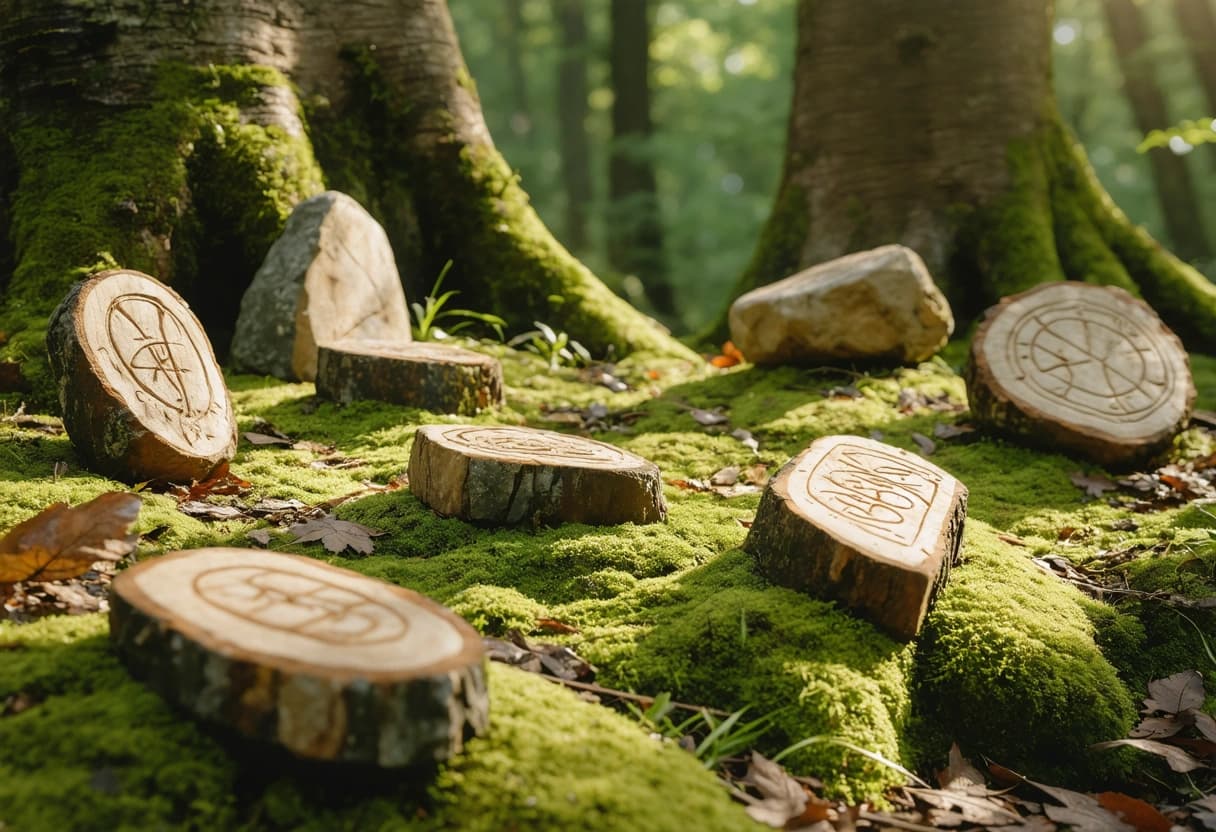
What is a rune reading?
Runes are the characters of ancient Germanic alphabets, used in Northern Europe between the 2nd and 12th centuries. The best known is the Elder Futhark — 24 runes, named after its first six letters (F-U-Þ-A-R-K). Each rune has a name in proto-Germanic, an angular drawing (designed to be carved on wood, stone, or bone), a sound, and a deep archetypal meaning.
A few examples: Fehu (ᚠ) symbolizes cattle, moving wealth, abundance; Uruz (ᚢ) the brute strength of the bull, courage; Ansuz (ᚨ) the Aesir, divine speech, inspiration; Wunjo (ᚹ) joy, harmony; Hagalaz (ᚺ) hail, necessary ordeal; Algiz (ᛉ) protection. The meaning of a reading emerges from the rune drawn, its position (upright or reversed), and its relationship to other runes in the spread.
Two other variants coexist: the Younger Futhark (16 runes) used in the Viking era between the 8th and 11th centuries, and the Anglo-Saxon Futhorc (29 to 33 runes depending on variants) used in medieval England. The runic tradition was rediscovered in the 20th century, notably through the work of Ralph Blum (The Book of Runes, 1982) who popularized modern divinatory use. Today, the runic tradition is close to tarot's but grounded in a distinctly Norse pagan worldview, more archetypal and rawer.
When to consult a runologist
Runes particularly suit clients looking for an archetypal, direct answer, often tinged with a warrior-like or decided energy — they're rawer than tarot. Particularly well-suited to questions of determination, inner strength, decisive choice, hard transitions.
Runes speak well to those who feel connected to Norse mythology, the Viking spirit, or more broadly to European pagan spirituality. They're also used for deep introspection — each rune being a powerful archetype, the reading acts as a mirror of the client's inner forces and challenges.
Conversely, for detailed narrative questions or fine psychological analysis, tarot or pure psychic work are more suited. For precise yes/no questions, the pendulum is more direct. Good runologists will redirect you to another tool if your question doesn't fit runes.
How the session works
Browse the profiles of available runologists, compare reviews and Futharks practiced (most use Elder Futhark). Pick the mode (chat or phone) and a duration — rune readings are quick, 15-20 minutes is often enough.
After secure payment via Stripe, the session starts. You formulate your question. The runologist places the runes in a pouch (leather or fabric traditionally), mixes them while focusing on your request, then draws 1, 3, or 5 depending on the chosen spread.
The 1-rune spread (Odin's rune) gives the essential archetypal message on your question. The 3-rune spread (Norns) follows the past/present/future structure, referring to the three Norns of Norse mythology (Urd, Verdandi, Skuld). The 5-rune spread or cross spread offers a fuller analysis. The reading is often quick and direct, using archetypal language that the runologist translates for you. At the end, you can leave a review on their profile.
The 24 runes of the Elder Futhark and their meanings
The Futhark is divided into three groups of 8 runes called aetts (families), associated respectively with Freyr, Heimdall and Tyr. An overview of the 24 runes:
Freyr's Aett (creation, daily life): Fehu (wealth), Uruz (strength), Thurisaz (ordeal), Ansuz (speech), Raidho (journey), Kenaz (light, knowledge), Gebo (gift, partnership), Wunjo (joy).
Heimdall's Aett (transition, trials): Hagalaz (necessary chaos), Nauthiz (constraint, need), Isa (ice, stillness), Jera (yearly cycle, harvest), Eihwaz (axis, defense), Perthro (mystery, chance), Algiz (protection), Sowilo (sun, victory).
Tyr's Aett (spirituality, sacred): Tiwaz (justice, sacrifice), Berkano (rebirth, feminine), Ehwaz (horse, active partnership), Mannaz (humanity, self), Laguz (water, intuition), Ingwaz (gestation), Dagaz (dawn, transformation), Othala (heritage, grounding).
Some runes cannot be reversed because they're identical upside down (lists vary between authors): Isa, Sowilo, Ingwaz, Gebo, Eihwaz, Dagaz, Jera. For the others, their reversed position modifies or inverts the meaning — reversed Fehu can signal loss of wealth, reversed Wunjo can signal dissatisfaction.
Runes or tarot: which practice for you?
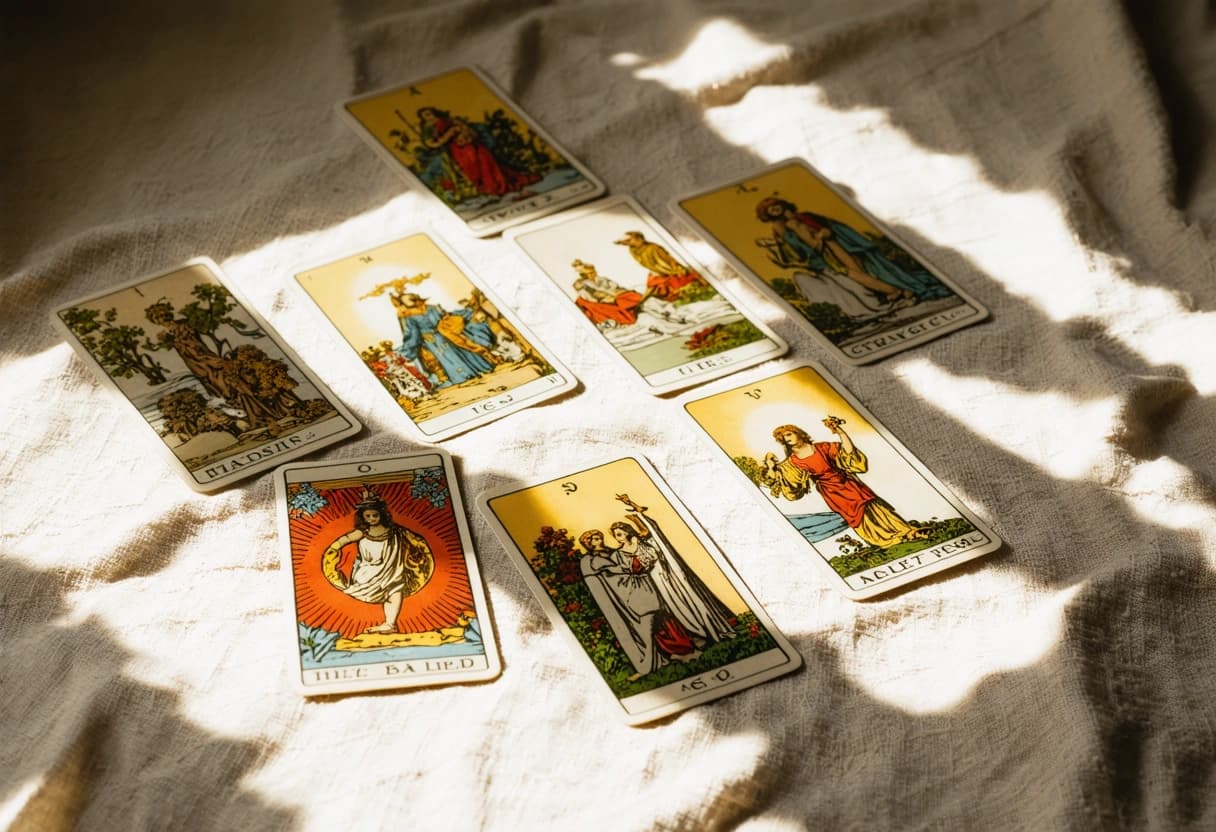
Both practices approach divination through drawing, but with different philosophies. Tarot (78 cards) is narrative: it tells a story, stages characters (The Magician, The Empress, The Emperor), explores fine psychological facets. Its reading is rich, often introspective, and invites reflection.
Runes (24 runes of the Elder Futhark) are archetypal: they concentrate pure energy in a single symbol. No complex iconography, no scenes: just a raw force (strength, joy, constraint, protection). The reading is more direct, quicker, sharper. It suits moments where you need a clear message rather than extended analysis.
Choose runes if: you're looking for a powerful archetypal message, you're drawn to Norse mythology, you want a quick and direct reading, you're going through a moment that calls for decision. Choose tarot if: you want a long detailed reading, you like nuanced introspection, you're looking to understand the mechanics of a situation. And nothing prevents using both to compare.
Updated on 13 October 2026
Available runologists
Marie Isis
Mediumship, Clairvoyance, Energy Work
Français
Don de naissance,je suis medium, clairvoyance, clair audience,je ressens,j entend les messages de mes guides,pour vous accompagner en toute bienveillance et humilité ,l ésotérisme m a attirée très jeune, ainsi que le domaine de l accompagnement venir en aide aux personnes 🙏de pars mes expériences passées,mes connaissances en Énergies (Domaine Holistique et Sonoterapie, Fréquences vibratoires )🌞lors de consultation la vibration de votre voix me permet une connexion 🌞
Cedrik
Runes, Oracles, Clairvoyance
Français
Plus de 30 ans de passion pour la spiritualité et la divination, au service de vos questions et de votre cheminement. À 54 ans, la spiritualité et l'univers de la divination font partie de mon parcours depuis de nombreuses années. J'ai toujours évolué dans cet univers, avec une curiosité constante et l'envie d'approfondir ma compréhension des différents supports et de leurs symboliques. Au fil du temps, j'ai développé ma pratique autour des Runes, du Belline et du Petit Lenormand, trois supports que j'apprécie pour leurs approches complémentaires. Aujourd'hui, je souhaite mettre cette expérience au service de vos questionnements, avec une approche sérieuse, bienveillante et sans jugement. Mon objectif est de vous proposer une lecture claire et structurée, tout en restant à l'écoute de votre situation et de vos attentes. Déroulement d'une consultation: Trois supports, trois niveaux de lecture, une même consultation. À travers les Runes, le Belline et le Petit Lenormand, je vous propose une lecture progressive et complémentaire de votre situation. Les Runes permettent d'abord de dégager les grandes énergies et les orientations qui se dessinent. Le Belline vient ensuite affiner ces tendances et apporter davantage de précisions. Enfin, le Petit Lenormand permet de descendre dans le concret et de mettre en lumière les situations, événements et éléments susceptibles de se manifester. Mon approche consiste ainsi à partir d'une vision globale pour aller progressivement vers des éléments plus précis et concrets, tout en conservant la cohérence de l'ensemble. Une lecture claire, structurée et personnalisée, pour vous aider à mieux comprendre les énergies et les situations qui vous entourent.
Frequently asked questions
How many runes are in the Futhark?▾
The Elder Futhark has 24 runes (the most used in modern divination), the Younger Futhark 16 (Viking era, 8th-11th centuries), and the Anglo-Saxon Futhorc 29-33 depending on the variant.
Can runes be reversed?▾
Yes, like reversed cards in tarot (which not every tarot reader uses), a rune drawn upside down modifies or inverts its meaning. Several runes of the Elder Futhark are identical upside down and therefore cannot be reversed (lists vary between authors): Isa, Sowilo, Ingwaz, Gebo, Eihwaz, Dagaz, Jera.
What's the difference with tarot?▾
Runes are more archetypal and direct. Tarot is more narrative and iconographic. The two complement each other — many practitioners combine both for rich readings.
Can I learn to cast runes myself?▾
Yes, it's an accessible practice. But fine interpretation requires knowledge of Norse mythology (Poetic Edda, Prose Edda, Icelandic sagas) and the symbolism of each rune. Count a few years for real mastery.
How much does a session cost?▾
Runologists set their own per-minute rates. Prices start at €1.80 per minute and vary depending on experience. The reading is often quick: 15-20 minutes is enough for a 3-rune spread.
Who was Ralph Blum?▾
American author (1932-2016) who popularized modern divinatory use of runes with his book The Book of Runes (1982). His version includes an extra rune (Wyrd, the blank rune of fate) that's not part of the traditional Futhark — its use divides purists.
Are runes compatible with other practices?▾
Yes, many runologists combine runes + tarot or runes + pure psychic work. Runes bring the archetype, the other tool feeds the detail. Combining approaches often enriches the reading.
Do I need to be pagan to consult on runes?▾
No. Many clients are not particularly spiritual — they consult for the archetypal quality of the reading. Affinity for Norse mythology helps but isn't necessary.
Related specialties
Other practices that might answer your question.
Related terms
Useful definitions to better understand this practice.